
How to Use Historical Evidence to Prioritise Research Areas
Learn what overlapping evidence can and cannot tell you about a potential research area.
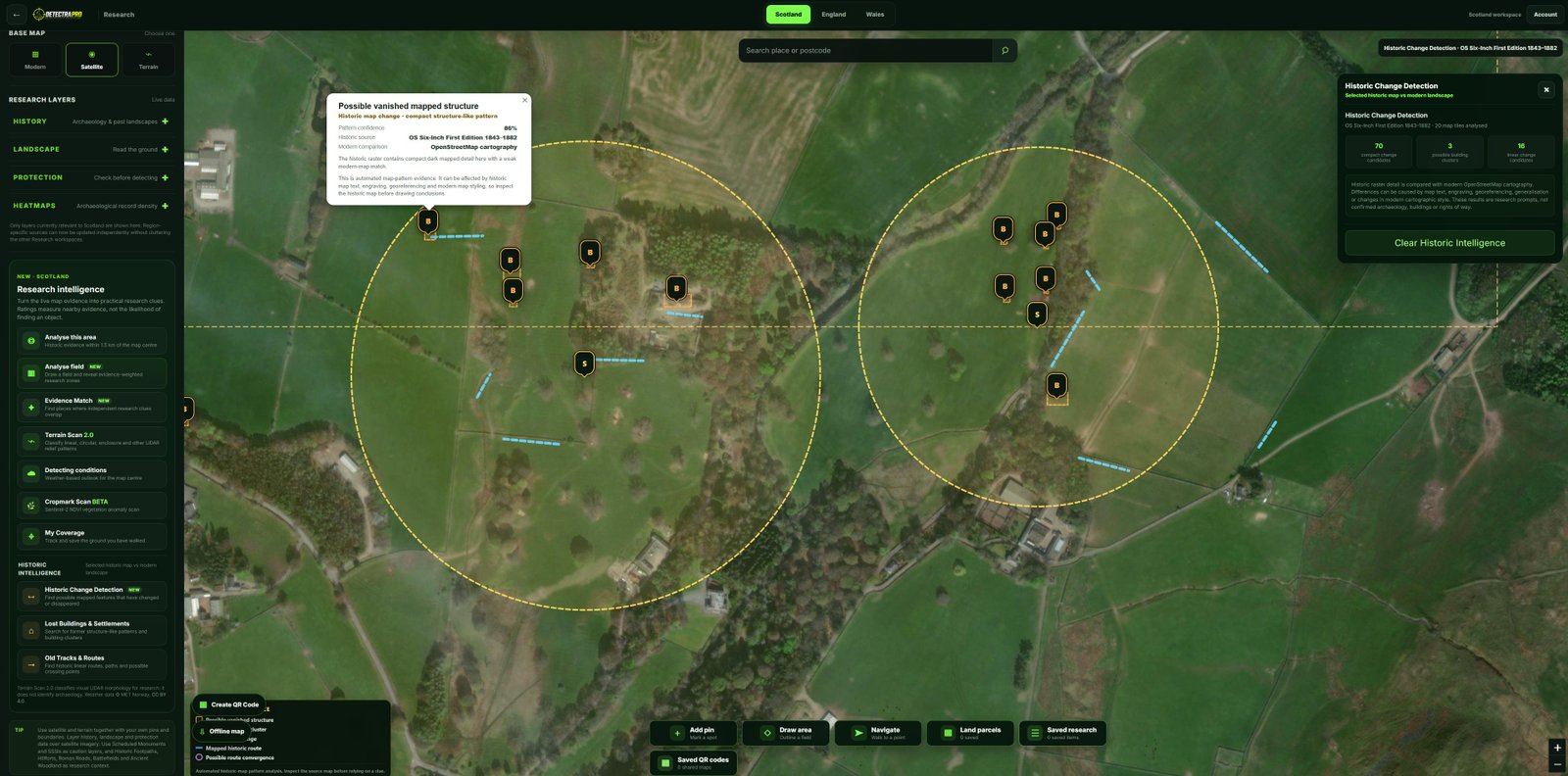
Illustrations should use genuine research screenshots. Research evidence does not guarantee finds.
Define a hotspot carefully
In research, a hotspot can simply mean an area with several mapped clues. It is not proof that valuable objects are present, and datasets may be incomplete or biased toward better-documented places.
Count independent clues
A historic route, former settlement and separately recorded site may provide complementary context. Several markers imported from one record are not several independent confirmations.
Read the record details
Dates, source quality, location accuracy and uncertainty matter more than a raw marker count. Investigate why each clue appears where it does.
Use Analyse This Area
Draw an area in DetectraPro and review the available evidence summary. Adjust the area to understand how results change, then open the original layers for closer inspection.
Decide what to research next
Rank questions for follow-up rather than promising finds: which records need checking, which old maps are missing and which locations are subject to restrictions?
Put your research into practice
Try DetectraPro’s research tools in the free demonstration area, or read the full guide to using each map feature.
Always obtain landowner permission and check relevant protections, restrictions and finds-reporting obligations before detecting.