
How Research Intelligence Helps You Investigate an Area
See how combining historical clues can make pre-detecting research more focused.
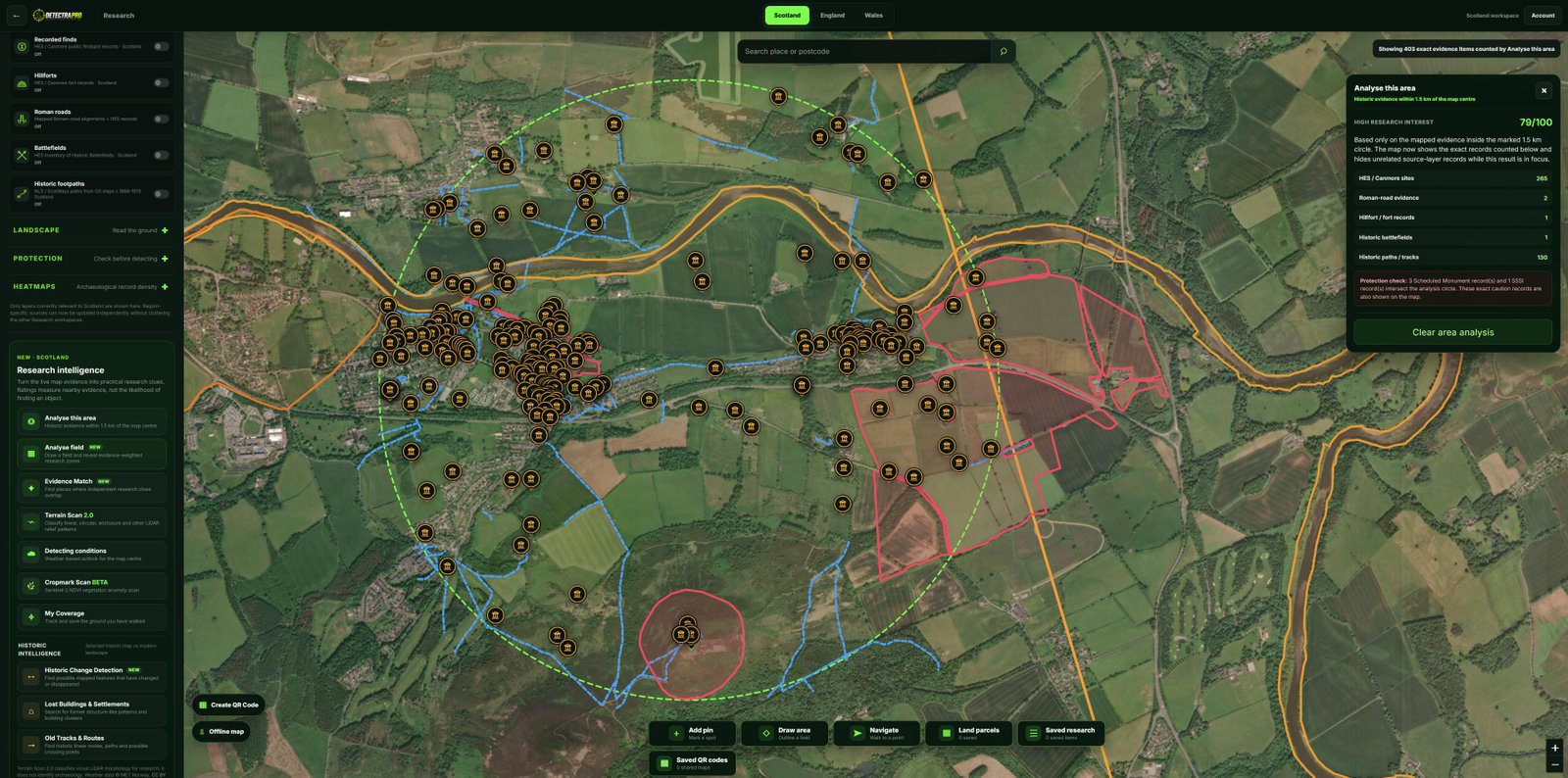
Illustrations should use genuine research screenshots. Research evidence does not guarantee finds.
Why one map is rarely enough
A historic route, a former building and a recorded site each tell only part of a story. Examining them together helps you form better questions about how an area changed over time.
Begin with an area you can verify
Choose an area where you know the modern location and can compare features against the map. Keep the search area manageable so the resulting evidence is easier to interpret.
Use the intelligence tools
Open the relevant DetectraPro research layers and review the available Research Intelligence results. Where supported, use Analyse This Area to collect nearby evidence into a single view. Results depend on source coverage and the selected location.
Look for meaningful overlap
Multiple nearby clues can justify further investigation, but proximity alone does not establish historical activity at a precise spot. Read record descriptions, inspect dates and check whether several markers refer to the same underlying source.
Turn results into a research plan
Record what you know, what remains uncertain and which sources to check next. The strongest outcome is a better-informed plan, not a promise that coins or artefacts will be found.
Put your research into practice
Try DetectraPro’s research tools in the free demonstration area, or read the full guide to using each map feature.
Always obtain landowner permission and check relevant protections, restrictions and finds-reporting obligations before detecting.